

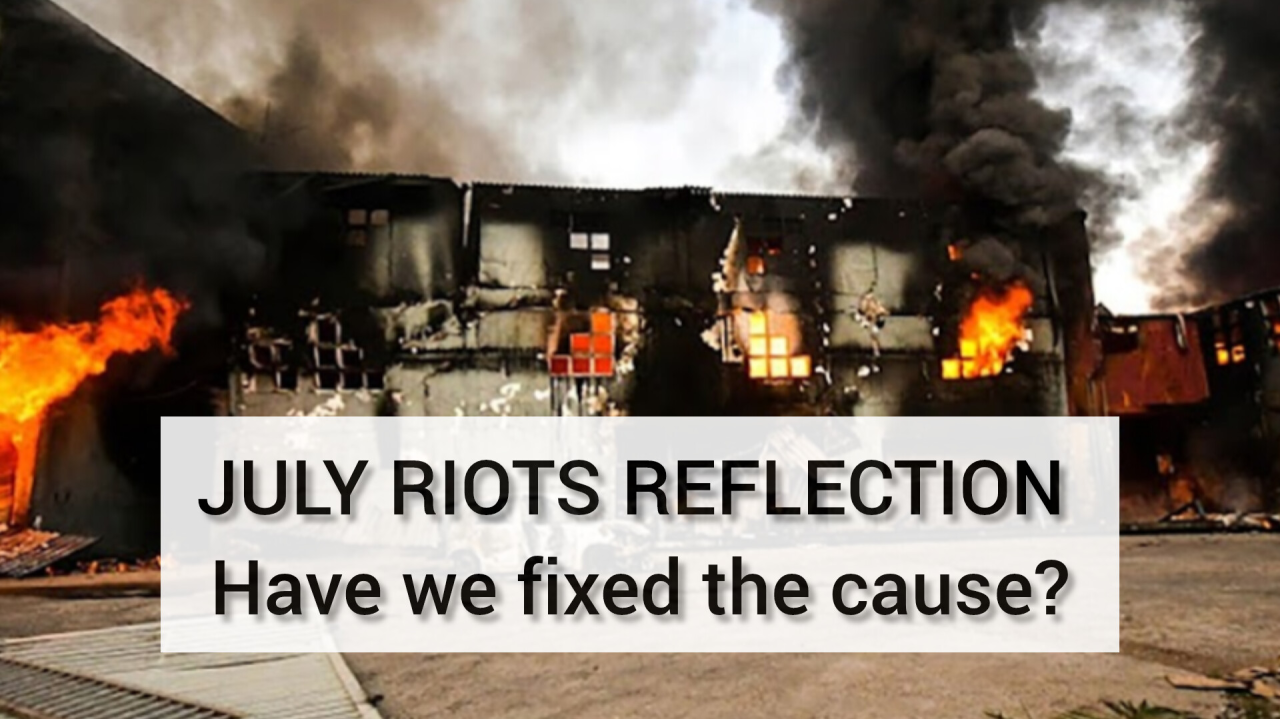

Image from Business Live – Edited by TEA
Taking a look back three years ago, the month of July marks the 3rd anniversary of the devastating July riots that engulfed Gauteng and KwaZulu-Natal, two major provinces in South Africa. These riots weren’t just about looting; they were the result of long-standing economic and social issues within our township communities. The townships have always been a boiling pot of economic frustration, lack of service delivery and the socioeconomic impact of a failed state is most felt the hardest my marginalised people eKasi. They’re was a survey done that unpacks that over 95% of small businesses in the Township Economy done have business insurance so when riots and protests turn violent the biggest loser is small business because recovery is next to impossible.
A famous proverb says, “A child who is not embraced by the village will burn it down to feel its warmth.” This proverb rings true for our townships; if people feel excluded and marginalised, they will take drastic measures to be heard. The riots were a manifestation of this frustration.
Townships have a painful history. They were deliberately created to segregate black individuals from economic hubs, pushing them into marginalised areas with limited resources and opportunities. This historical segregation has led to systemic issues that continue to plague these communities today. The frustration and economic exclusion in these areas create a boiling pot of discontent, which can easily spill over into unrest, as we saw in July 2021.
Small businesses are vital to the township economy, but they face significant hurdles. According to recent statistics, two-thirds of small businesses in South Africa fail within the first five years. This high failure rate is due to multiple factors, including lack of access to finance, insufficient support structures, and limited market access (https://unctad.org/news/south-africa-builds-new-roadmap-revitalize-entrepreneurship). Despite these challenges, small businesses are essential for job creation and economic growth. Small Businesses in the township continue to show tremendous resilience despite challenges.
In South Africa, small businesses represent over 98% of formal businesses, yet they create less than a third of all formal jobs. This discrepancy highlights the need for better support and development initiatives. The survival rate of these businesses is low, with two-thirds failing within the first five years and about 20% failing within the first two years. High youth unemployment and the prevalence of informal sector operations further exacerbate the situation (https://unctad.org/news/south-africa-builds-new-roadmap-revitalize-entrepreneurship). In light of the above the reality is that the “informal economy” is a big economic driver and creates millions of jobs however we fails this significant part of the economy by excluding ourselves from participating in this thriving market. Once you take on the task of understanding the township economy you will realise that we need the township economy more than it actually needs us. So you ask where will growth come from? It will come small business and the township economy.
To prevent future unrest and foster a thriving township economy, corporate South Africa must play an active role. Here are three key strategies to consider:
1. Meaningful Impact: Corporate social investment (CSI) must be more than just a tick-box exercise. It needs to be targeted and impactful, addressing the root causes of economic disparity. This involves investing in infrastructure, education, and business development within townships. For instance, corporates can fund training programs that equip township entrepreneurs with essential skills and knowledge.
2. Effective Use of Funds: Utilize CSI and enterprise development funds to create sustainable support models. This includes simplifying regulatory processes and providing access to finance through innovative channels. For example, creating micro-loan programs or partnerships with financial institutions can provide much-needed capital to small businesses.
3. Leveraging Existing Resources: Integrate township businesses into corporate supply chains. Providing market access and opportunities for growth can make township businesses strategic partners rather than mere suppliers. This approach not only supports small businesses but also diversifies the supply base for larger corporations.
To ensure long-term stability and prevent future unrest, we must build an inclusive economy. This involves:
– Education and Skills Development: Implement training programs tailored to the needs of township entrepreneurs. Workshops, mentorship programs, and vocational training can provide the necessary skills to thrive in the modern economy.
– Access to Finance: Create channels for easy access to both traditional and non-traditional financial resources. Simplifying application processes for funds and providing various financial products can help address the capital needs of small businesses.
– Regulatory Support: Simplify and streamline bureaucratic processes to make it easier for small businesses to operate. Reducing red tape and creating resources to help entrepreneurs navigate the regulatory landscape can significantly impact their success.
Reflecting on the July Riots
The July riots of 2021 were a stark reminder of the urgent need to address the systemic issues within the township economy. Ignoring these problems is not an option. By taking deliberate and meaningful actions, corporate South Africa can help create a more inclusive and resilient economy. Corporate South Africa must recognise that no business can thrive in a failing economy. It is in everyone’s best interest to ensure that the township economy is vibrant and inclusive. This involves a shift in mindset from viewing these areas as charity cases to recognising them as integral parts of the national economy.
The township economy holds immense potential that, if unlocked, can drive significant economic growth for South Africa. Corporate South Africa has a pivotal role to play in this transformation. By investing in education, providing access to finance, simplifying regulatory processes, and fostering sustainable partnerships, we can ensure a future where all South Africans have the opportunity to thrive.
Call to Action
Get Involved: Partner with us in our initiatives aimed at supporting township entrepreneurs. Your involvement can range from funding and mentorship to integrating township businesses into your supply chains. Together, we can make a meaningful impact and build a future of inclusive economic growth. Let’s take care of our country, our people, and ensure that the events of July 2021 are never repeated.
Stay Informed: Continue to engage with our newsletter for more insights on how corporates and the township economy can work together to build a more inclusive South Africa.
Sources:
– [UNCTAD on South Africa’s Roadmap to Revitalize Entrepreneurship](https://unctad.org/news/south-africa-builds-new-roadmap-revitalize-entrepreneurship)
– [South African Police Service, 2024 Quarterly Report](https://www.saps.gov.za/)
– Impact of Lockdown on Small Business in the Formal and Informal Economy 2023
